Staff and student assistants at the University Archives recently caught a glimpse of the enormous effort in producing large-scale events when they assisted in planning the celebration of President Frenk’s inauguration, which took place during the last week of January 2016.
The University Archives, which houses a vast expanse of records documenting the history of the University of Miami, provided research and exhibition assistance for the “Firsts at UM” event on January 27 in the Newman Alumni Center as well as the inaugural ceremony, which was held on January 29 at the Bank United Center.
Koichi Tasa says December to January was the busiest time in the decade he has served as University Archivist. “In these months, we gained valuable experience through collaboration with colleagues outside of the UM Libraries,” Tasa said. “We were proud to help bring UM history to life through the materials we preserve.”
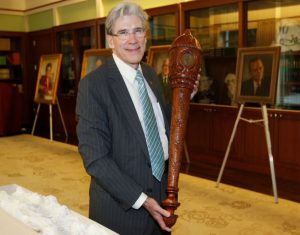
President Frenk holding the Second Ceremonial Mace of the UM. Photo Courtesy of University Communications.
Working with the Office of the President, University Communications, and other University departments, Tasa and his staff culled information as well as artifacts, including more than 300 high-resolution images for a video that aired at the event and past inaugural addresses and programs from three previous inauguration ceremonies.
The department’s materials were also featured in an exhibit at “Firsts at UM,” in which President Frenk and UM historian and author Arva Moore Parks discussed key moments throughout the 90-year history of the U. Guests, including several pioneers and trailblazers, viewed and engaged with prized memorabilia such as the second commencement mace of the University and the commencement cap and gown worn by the first University president Ashe. Official portraits of the former five UM presidents, also housed by the Archives, were on display.
“Inauguration 2016 was an opportunity, in addition to showcasing our collections and services, to take an active part in the history as it’s being made,” Tasa says. “An unexpected benefit from this experience was that we got to learn more about our wonderful colleagues, who are already proposing ideas for the U’s centennial celebration in 2026.”
In order to assist in facilitating these ideas, Tasa says the University Archives plans to reach out to more schools, departments, and student groups to archive their organizational history. “We believe that such efforts would be a tremendous help for the next historian to write a new book about the University of Miami at the centennial anniversary.”
By David Colbus, Senior in the College of Arts and Sciences
Student Assistant, University Archives
Throughout last fall, the University Archives worked to curate and install the Pan American University: The Original Spirit of the U Lives On exhibit on Richter Library’s first floor. This was the first exhibit I encountered as a new University Archives assistant. To introduce me to the Archives’ work and purpose, my supervisor Marcia Heath gave me a tour of the recently completed display. The exhibit celebrates Pan Americanism, the University’s 90 years of history, and the new president, Dr. Julio Frenk. Beyond teaching me about my new role in the Archives, this exhibit educated me on the University’s history, and how that history informs the institution it is today.
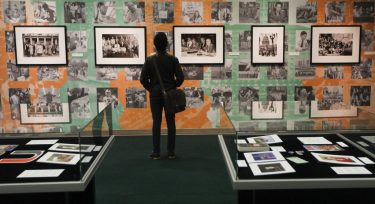
“Pan American University: The Original Spirit of the U Lives On,” located on the first floor of the Otto G. Richter Library, features historical materials dating back to UM’s founding years. Photo by Andrew Innerarity.
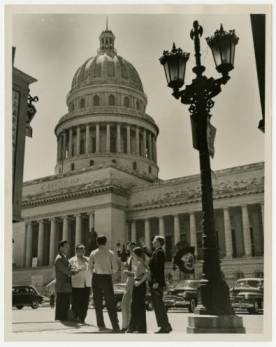
The exhibit tells us that “Before there were University of Miami students or faculty, defined programs, or even a single building, the enduring concept of UM as the Pan American University had taken form.” Congressman William Jennings Bryan dreamed up this concept, one George Merrick and other founding members of the University strongly shared. Merrick envisioned a “university of our own tropical America…to supply that definite unfilled need of a cultural contact by university facilities with all of Latin America.” This Pan American University would invite cultural and academic exchange across all the Americas. This ideal informed the University’s earliest programs, research focuses, and even the University’s original architectural design. Victor and Rafael Belaúnde were specifically recruited to teach Latin American history and economics, and their establishment of the University’s Hispanic American Studies and Hispanic American Institute set the stage for many of today’s Hispanic-focused programs. The University of Miami also maintained close academic contact with the University of Havana through its early years to facilitate the academic exchange that Pan Americanism called for.
Photo featured in the exhibition of UM drama students outside of the capitol building in Havana, Cuba, c. 1950s, from the University Archives.
University Archivist Koichi Tasa came up with the vision for the exhibit and served as its chief curator, culling records from the Office of the President Records as well as visual materials from the UM Historical Photograph Collection and UM Campus Architecture Collection, among others from the University Archives. “It’s a great occasion to showcase our collections and knowledge about UM’s history,” Tasa said.
Archives specialist Marcia Heath worked with Tasa in research for the exhibit, and supervised the Archives’ assistants in their tasks. “We have an opportunity to start and frame important discussions about history, culture, and diversity in our community,” Heath said. “This resource encourages students to broaden their horizons.”
The exhibit was a collaborative effort within the UM Libraries and beyond: Beatrice Skokan and Yvette Yurubi from the Special Collections department and Meiyolet Mendez from the Cuban Heritage Collection researched and provided materials on topics such as the founding of Coral Gables and friendship between UM and the University of Havana. The Library Communications team provided editorial and promotional assistance for the exhibition. They also worked with local artist and UM alum Alex Vahan (Cushy Gigs, Inc.) in the creation of an eye-catching photographic collage surrounding the exhibition space.
Archives’ student assistants Jodiann Heron, Davin Stencil, Cody Andreoni, Sabrina Anand, and I located and researched materials for the exhibit. “What I really like is learning so much about the University. Every single day you learn something different,” Heron said. When I looked through the display cases, I remember being amazed by the complexity and importance of the exhibit. Yes, the exhibit focuses on the cornerstone idea of Pan Americanism and the University of Miami’s close ties to Latin America, following through the University’s creation and history, as well as into the modern day. However, it also locates one of the University’s greatest strengths, our diversity, within that original idea of Pan Americanism. It shows how the University’s devotion to broader understandings of cultural acceptance, of diversity, of peace and equality, stem from this one idea.
Local artist and UM alum Alex Vahan (Cushy Gigs, Inc.) created the historical wall design for the exhibition space using digitized archival materials. Photo by Andrew Innerarity.
This exhibit represents the University Archives in capacity and purpose, and represents its role they could play for the future. Looking forward to 2025, the University will be celebrating its 100th anniversary. The University Archives will play an integral role of this celebration, showing the growth and evolution of our University from the ideals that it was founded upon. I hope that all of the University of Miami, every department and office, helps us in this endeavor. “If anyone in the University wants to celebrate their anniversary, the Archives are here to work with them,” Tasa said. When the centennial celebrations arrive, everyone at this university, everyone who has contributed to its achievements and shaped its reputation, deserve to be celebrated as a part of that history, so that their efforts and accomplishments are remembered, and their spirit and ideals are passed on for those to come.
The exhibition “The Pan American University: The Original Spirit of the U Lives On” is on view on the first floor of Otto G. Richter Library through May 2016.
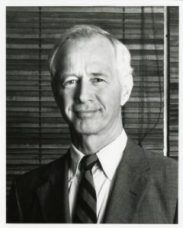
Edward T. Foote, 4th President of the University of Miami
Written by Koichi Tasa and Sarah Block
Staff at the University Archives were saddened by the news of President Foote’s passing on Monday. University Archivist Koichi Tasa and Archives Assistant Marcia Heath each have fond memories of assisting the former president with archival materials during his tenure.
“President Foote was a very kind person who was always willing to give his time and knowledge to help others,” says Heath, who helped the former president contribute materials to his presidential archive from 2002 to 2008.
Tasa got to know President Foote in 2010 when he contacted the Archives for assistance in accessing his papers. “He was a very important leader for the U and for our local community,” Tasa said. “We would like to express our sincere condolences to the family.”
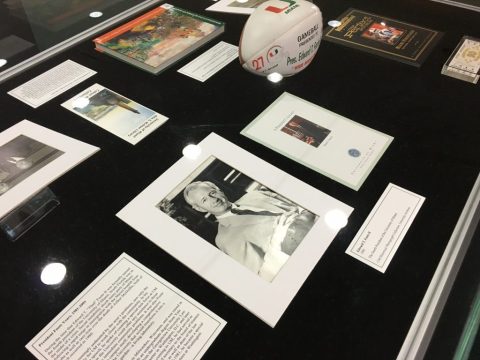
A summary of Foote’s legacy is featured in the current exhibition Pan American University: The Original Spirit of the U Lives On, located on the first floor of Otto G. Richter Library:
During the time that Edward T. “Tad” Foote II was formally named the fourth president of the University of Miami, South Florida was in the midst of a crisis. Social instability shook many parts of Miami following a rapid surge in immigration with the Mariel boatlift from Cuba as well as race riots over the death of Arthur McDuffie, both of which occurred in 1980.
Foote, seemingly undaunted by the area’s problems, saw only the opportunity for UM to work closer with the community. In his inauguration speech, he spoke of creating a special task force at UM to examine how the University could offer any assistance to those working to solve immediate community problems. It was also Foote who beautified the campus itself, developing a comprehensive landscape plan for the University that would transform it into a magnificent botanical garden—a living laboratory.
President Foote’s presidential papers, preserved by the University Archives, will be available to the public after 2030 upon approval of the Office of the President.
Case dedicated to President Foote in Pan American University: The Original Spirit of the U Lives On, on view at Richter Library.
How did UM’s athletic program get started? What did the first team look like? Do you know how we came to adopt the name “the Hurricanes”?
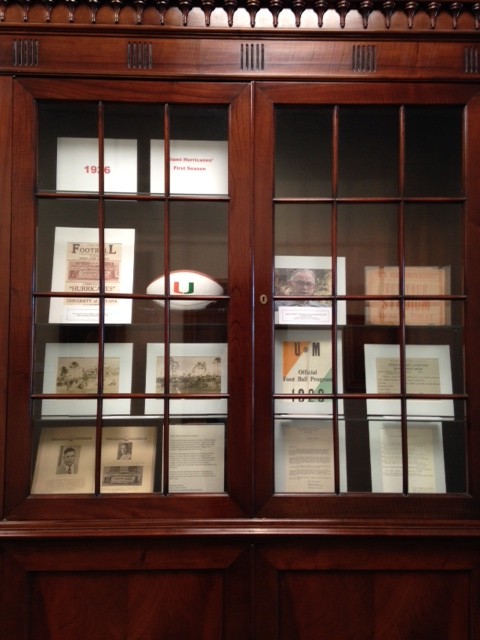
With the fall semester and another exciting football season just around the corner, there’s no better time to explore the history of our team. A new exhibit from the University Archives features materials related to the Hurricanes’ first season, in 1926.
The exhibit is located on the third floor of Richter Library, adjacent to the Presidential Portrait Gallery, which includes portraits of the five presidents of the University, from 1925 to present.
Sports history is one of the most frequently referenced topics at the Archives. In addition to directories and programs that have been donated to us by the University of Miami Athletics, resources such as the University of Miami Historical Photograph Collection, IBIS yearbooks, and The Miami Hurricane Archive Online (1927-2004) hold a wealth of information about UM sports through the decades. In the coming year, even more information on the subject will be available from the fifty linear feet of historical images, press clippings, and publications that were recently donated by the department.
If you would like to learn more about the items on display in the exhibit or explore other topics related UM’s history, come by the University Archives, located on the 8th floor of Richter Library.
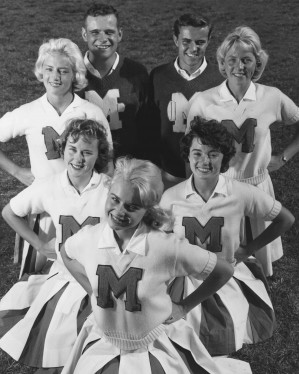
In University Archives, cheerleaders from another era sport an M rather than the now-familiar U.
Southern Suns and Sky Blue Water Showcases Student Life Over the Decades
University of Miami Libraries University Archives’ exhibition, Southern Suns and Sky Blue Water, is on display through January 2014 at the Otto G. Richter Library, and features photographs, fanfare, memorabilia, and publications that reflect student life at the University during the 1960s, 1980s, and early 2000s.
“There is a vibrant history here at UM,” says Koichi Tasa, University archivist and the exhibition’s lead curator. He notes that the exhibition’s title, the first line of the University’s Alma Mater, alludes to the timeless backdrop that unifies University athletics, student activities, and campus events across many generations.
Among the exhibition’s ’60s generation mementos is a vintage photograph of soul music pioneer Ray Charles performing at the UM Homecoming Concert in 1963, just two years after the University officially desegregated the campus. Research Services Supervisor Marcia Heath, a curator of the exhibition, said that Charles’s performance was a catalyst in raising morale among the student body during the racially charged period.
“These materials really show us where we’re coming from…how far we’ve come,” she said, also referring to the transformation in the University’s physical campus. One 1962 photograph of the Richter Library shows the completion of the main floors and stacks addition, which earned a design award by Florida Architect in 1964. The library now houses a print collection of more than four million volumes.
The exhibition, also curated by Education and Outreach Librarian William Jacobs and Special Collections Research Assistant Steve Hersh, includes IBIS yearbook spreads chronicling the evolution of traditions like Carni Gras, where students in the ’60s and ’80s strutted in high gear to embrace the Carnival spirit.
The exhibition even houses traditional fanfare such as a dink, once-required headgear freshmen sported until Miami’s first touchdown, and then tossed into the air. “Like the world, the University is changing daily,” said Cynthia Cochran, director of alumni programs. “The opportunity to visit some artifacts from those periods only enriches [alumni’s] visit back to campus, for some of whom it has been 50 years.”
Since he started at the University Archives in 2007, Tasa has worked closely with the UM Alumni Association. In 2010 artist Jacobina Trump created a mural at the Alumni Center, inspired by collection materials, conveying an unchanging horizon over the many generations to walk the campus. Like the exhibition, it also bears the words Southern Suns and Sky Blue Water. “Those words hit home for us all,” Tasa said.



 University of Miami Archives -- Let's Archive It