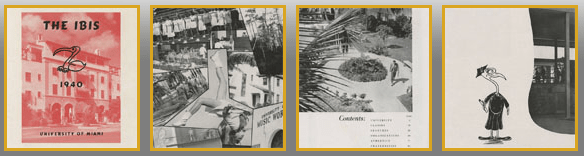
IBIS, the University of Miami’s yearbook, has been published annually since 1927.
The University of Miami Archives has recently completed a significant digitization project resulting in online access to one of the University’s oldest and most-cherished publications, IBIS yearbook. The first 33 volumes of IBIS, from 1927 to 1959, are now available for browsing and research through the University of Miami Libraries’ website. The collection is fully searchable by keyword, and images can be saved or printed for research or personal use.
The project, which began in fall 2013, was completed in collaboration with the Libraries’ Preservation, Digital Production, Cataloging & Metadata, and Web & Application Development departments.
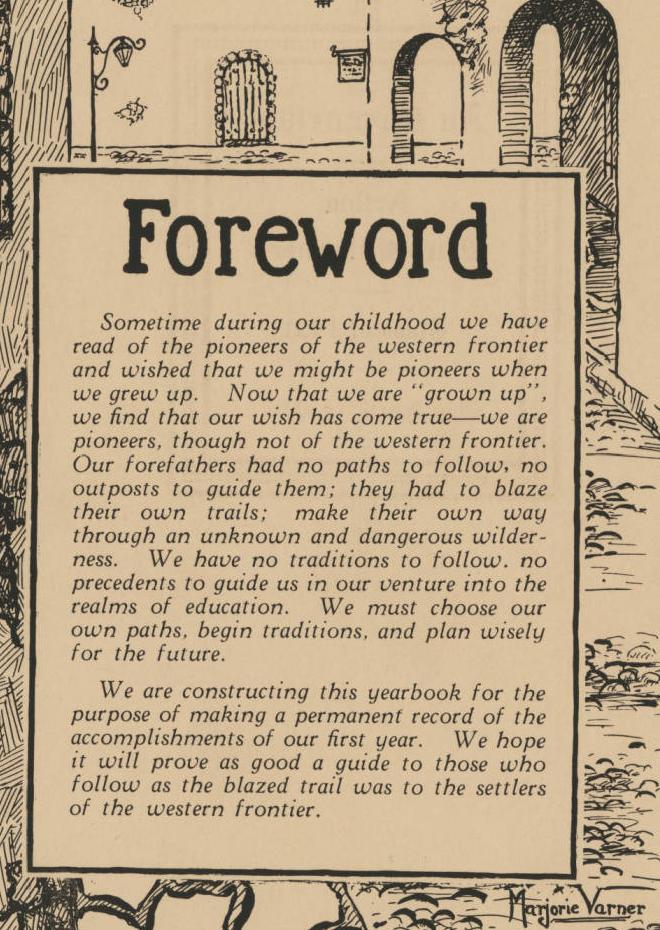
Foreword from IBIS, 1927, stating “we hope [this yearbook] will prove as good a guide to those who follow as the blazed trail was to the settlers of the western frontier.” (Click to enlarge.)Housed at the University Archives in the Otto G. Richter Library, the entire yearbook collection is one of the most frequently researched archival resources by the UM community. It’s also considered a record of enduring historical value on subjects ranging from student life and campus activities to regional and national events. The publication is a frequent past recipient of the Columbia Scholastic Press Association’s Gold Crown Award, the highest honor for college yearbooks in the country.
You can visit the University Archives, located on the eighth floor of the Otto G. Richter Library, on weekdays from 9 a.m. to 4 p.m. Please contact University Archivist Koichi Tasa for questions or suggestions on archiving and using historical resources of the University of Miami.
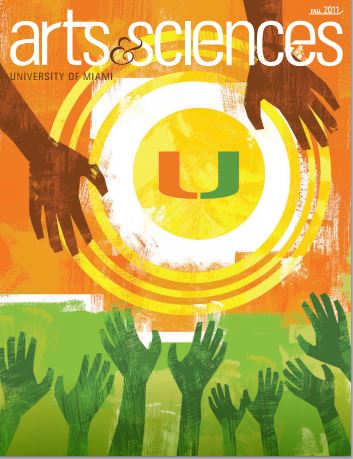
Upon request of the College of Arts and Sciences, we digitized the complete issues of their Arts & Sciences magazine. Please go to the link below to browse the issues or research the entire content by keyword. We are delighted to work on this project, because the publication has enduring research value on the College’s activities, faculty, staff, students, and alumni.
Arts & Sciences has been published by the College of Arts & Sciences at the University of Miami since 1998 in the fall and spring. The predecessors of the publication, AlumNews (1978-1981), Focus (1982-83), and Cornerstone (1992-1997) as well as Making History (Fall & Winter 2005 by the History Department) are made available in the digital collection.
Digitization of the A&S magazine is a collaboration of Richter Library in Preservation, Digital Production, Cataloging & Metadata, Digital Repository, and the University Archives.
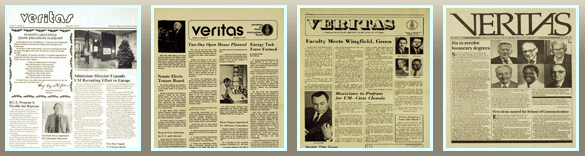
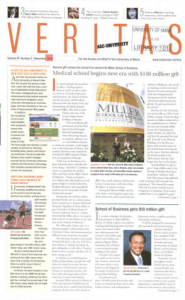
The University of Miami Libraries has completed the digitization of a major, historic publication of the University of Miami. Veritas served as the faculty and staff newsletter from September 1960 to December 2008. Produced by University Communications, the newsletter reported on University news, faculty profiles, event listings, athletics programs, and other topics. Its successor, E-Veritas, was introduced in 1999 and is distributed to employees weekly by email.
Please go to the link below to search the Veritas Archive or browse by issue. You can save and print the articles for your research and personal use.
Veritas is one of many University publications housed at the University Archives that can now be accessed online. The digitization of Veritas and other historical publications is a cooperative effort at the University of Miami Libraries involving the Digital Initiatives, Preservation, Cataloging & Metadata, and Web & Emerging Technologies teams.
You can visit the University Archives, located on the eighth floor of the Otto G. Richter Library, on weekdays from 9 a.m. to 4 p.m. Please contact University Archivist Koichi Tasa for questions or suggestions on archiving and using historical resources of the University of Miami.
It was a quiet afternoon a few days ago. My phone rang and I heard a raspy voice of an elderly patron. I heard him passionately telling me a story that he was in his 90s, he is retired for many years, his hobby is building model planes, and someone at a Washington DC museum gave him my phone number … I could not understand him at all. I heard some words like “airplane … U of M … early 30s … Lanier” in the conversation.
I finally figured out what this was about when he gave me the spelling of the word “Vacuplane” for the third time. I searched our digital collections by the keyword and found a dozen or so historical images and several newspaper clippings on the subject right away. I knew the University of Miami had an aviation training program in the past, but I did not know our students even built airplanes. Please see the image above with a note “Aviation courses at UM began in 1929 and ended in 1931. During that time students in Aviation built the Lanier XL-3 Vacuplane. It flew.” (It looks amazing!)
I copied the pictures and some diagrams of the plane and mailed them to the patron. I spent more time than I normally do for the request, because I enjoyed looking this up for myself. I wonder if the patron will give me a picture of the model he is going to create.
Diversity is a very important research subject for us. The question keeps coming back several times a year with slightly different angles depending on who is asking for what kind of research project.
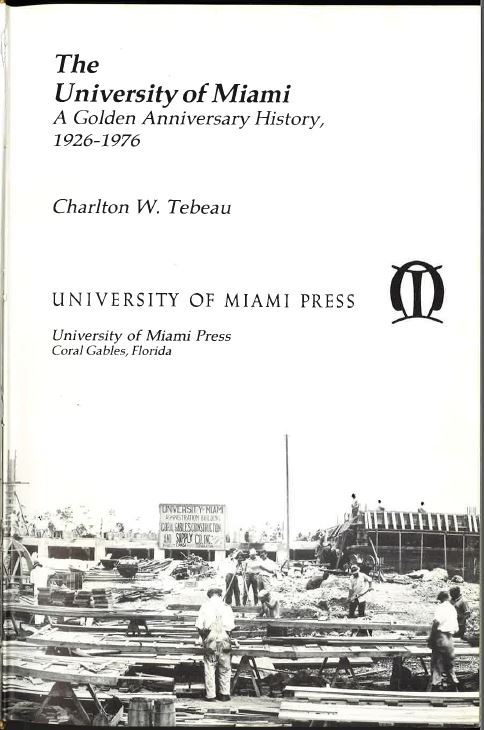
The publication we use most is a history book “The University of Miami: A Golden Anniversary History, 1926-1976” written by Dr. Charlton W. Tebeau, 1904-2000, who was a professor at the UM, Chairman of the History Department, and a prominent historian of Florida. The chapter 12 of the book “Desegregation, Integration, and Minority” provides a perfect overview of the subject with many interesting historical facts and images.
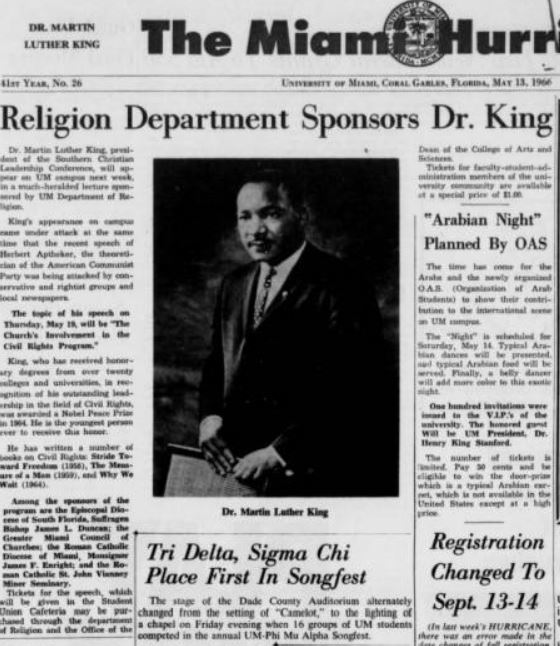
The Miami Hurricane is also an excellent source for news and events on the subject. You could read articles on student protests on campus. Martin Luther King was invited to the University for a lecture in 1966.
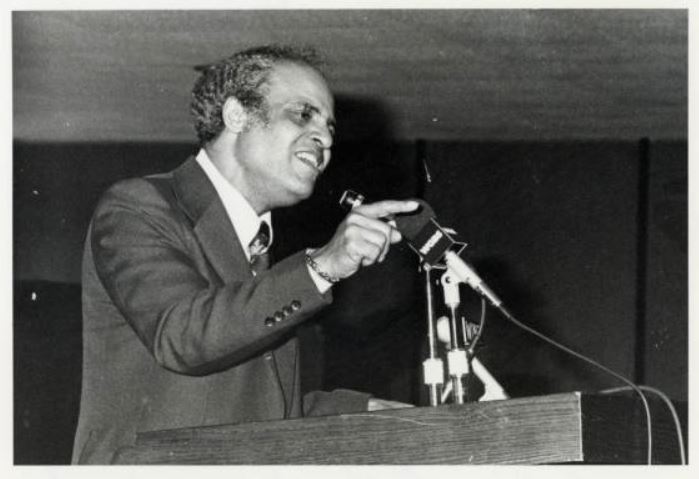
Benjamin Hooks, NAACP Executive Director, speaking at Black Culture Week
The UM Historical Photograph Collection can offer you effective visual images related to the subject, such as Dr. King’s memorial service held on campus in spring 1968 and the Black Culture Week held on campus in the 1970s.
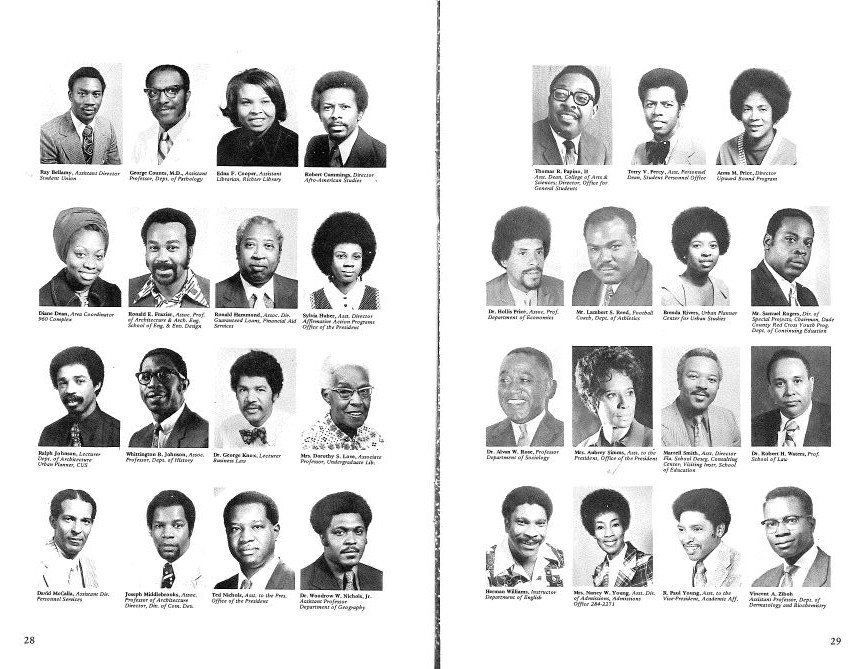
List of black facluty found in the 1974-75 Malaika Handbook
Also, we hold a collection titled “Malaika” published in the 1970s and 1980s by the United Black Students of the university. I used this collection recently for a patron who was looking for pictures of black faculty in the past. We would love to archive additional materials like this one if available.
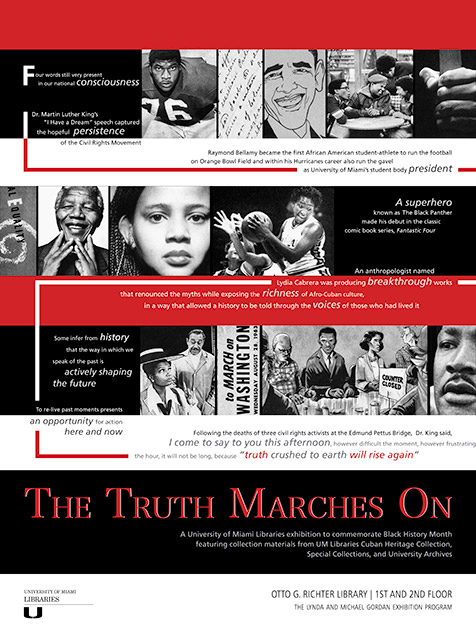
Lastly, we would like to tell you we were proud to be a part of the research and exhibition effort for the Black History Month Exhibition held at the library for the first time this year. Please go to the link below for the subjects and exhibits presented at the exhibition. This wonderful website was created by my colleague Natapol Phensiriphand, Information Specialist, Education & Outreach department.


 University of Miami Archives -- Let's Archive It