In the News, People

Legendary Alum Makes Visit to the Archives

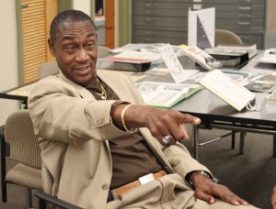
Meet Mr. Ray Bellamy who visited the University Archives on September 28, 2016 (Photo by Cory Czajkowski, Special Collections)
Pioneering UM alum Ray Bellamy visited the University Archives on September 28, 2016 (Photo by Cory Czajkowski, Special Collections).

By Koichi Tasa, University Archivist

Even when I was a newly hired University Archivist in fall 2007, I knew the name Ray Bellamy, his face, and his historical importance for the University as the first black athlete (1967) and the first black president of the student government (1971) from Dr. Charlton Tebeau’s 1976 publication The University of Miami: A Golden Anniversary History, 1926-1976.

So, the staff of the University Archives were thrilled to meet the legendary alumnus during his recent visit to Miami in the last week of September. He first visited the current UM Libraries exhibition Miami Celebrates: The Orange Bowl Festival, 1930s-1990s, then came up to the 8th floor to review our materials on him as well as our historical collections of black students and faculty.
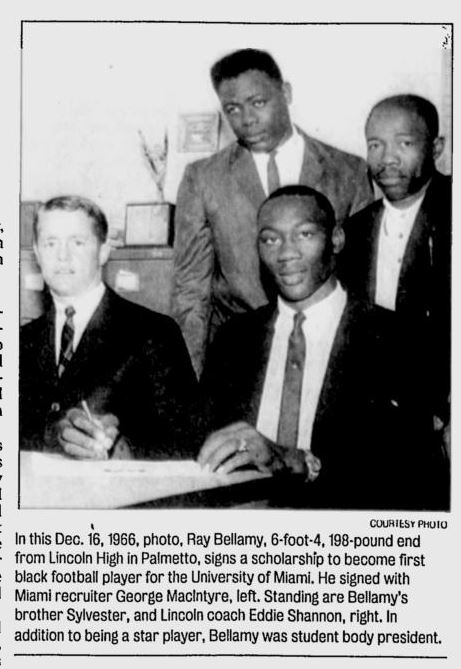
I was happy to find the picture of this historic moment in the February 1, 2002 issue of The Herald Tribune.
The Herald Tribune, February 1, 2002.

He talked to us about his experience when at the University in the midst of the racial integration struggle in Miami.

You can find out a lot about Mr. Bellamy’s accomplishments on the Internet and YouTube as well as in numerous articles and publications of the University. I would like to show you a compelling documentary I found on YouTube titled Changing the Game: a Deep South Conflict, a Compromise of Attitudes, which was created by David and Matt Mariutto (see below). I think this is not only a great piece on Mr. Bellamy but also a powerful teaching material on diversity.

Mr. Bellamy was brought to us by Ms. Denise Mincey-Mills, who is one of the co-chairs of the Alumni Association’s program “First Black Graduates Project,” which celebrates the first black graduates of the University of Miami in the 1960s and the 1970s. Please go to the link below for further information about the program, which takes place on February 24 and 25, 2017.
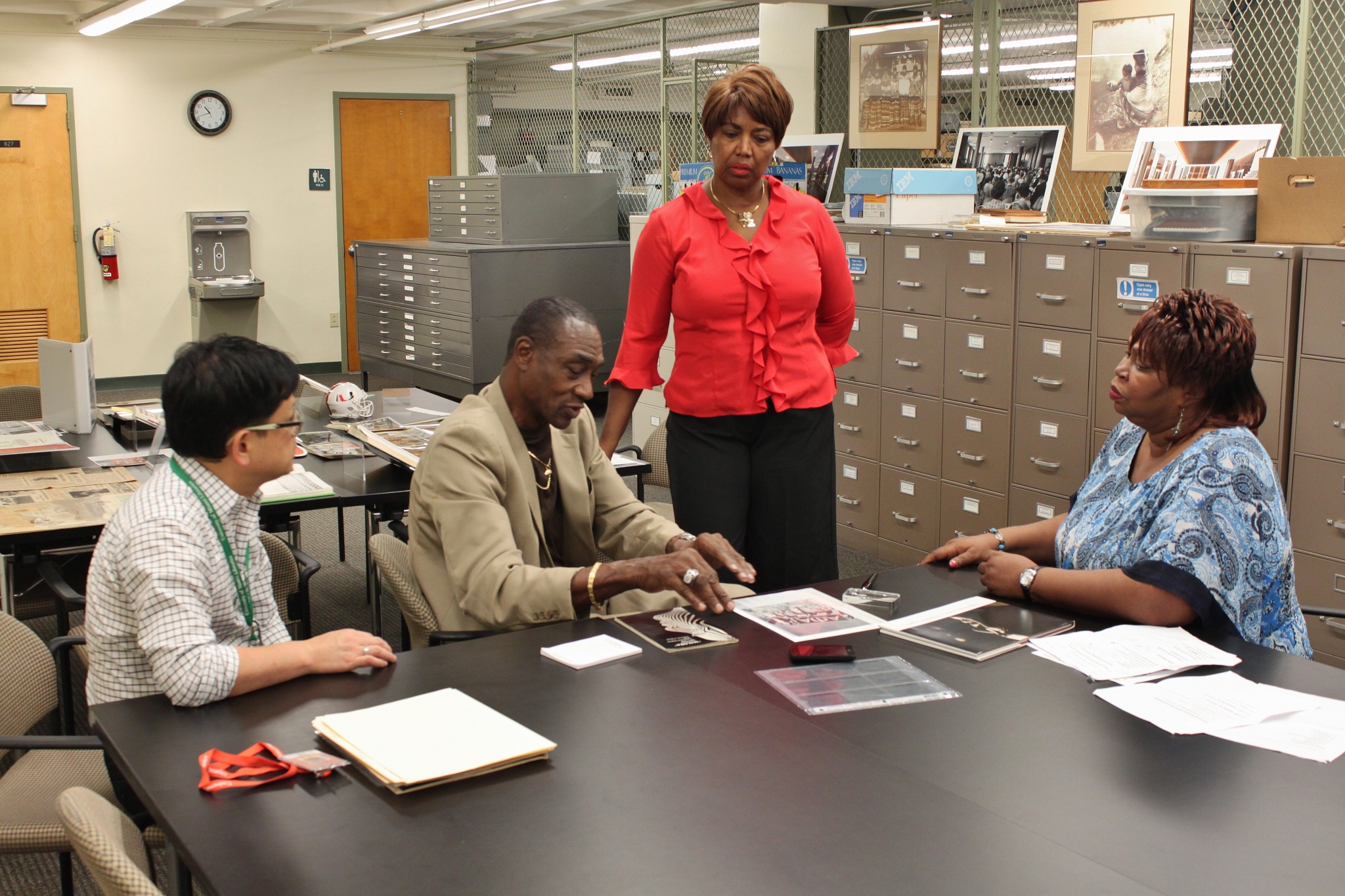
Ms. Mincey-Mills (pictured on the right) has been a driving force for the First Black Graduates Projects. We met her in January 2015, when she visited us to research Ibis yearbooks from the 1960s to identify black students. (Photo by Cory Czajkowski, Special Collections)
Ms. Mincey-Mills (pictured on the right) is a driving force behind the the First Black Graduates Project. She visited us first in January 2015 to research Ibis yearbooks from the 1960s to identify black students. (Photo by Cory Czajkowski, Special Collections)

Included in the program is a visit to the Otto G. Richter Library to view an exhibition “U Trailblazers – Black Students and Faculty Who Broke Color Barrier in the 1960s and the 1970s” (*tentative title) curated by the University Archives for the Black History Month as well as a reception offered by Richter and a lecture by UM’s history professor Dr. Donald Spivey.

See also: Miami Magazine article on the First Black Graduates Project

(Courtesy of Hurricanesports.com / Release: 2/04/2013)

Research Assistance

Research Assistance for 2016 Ibis Yearbook

2016 Ibis Yearbook just came out!

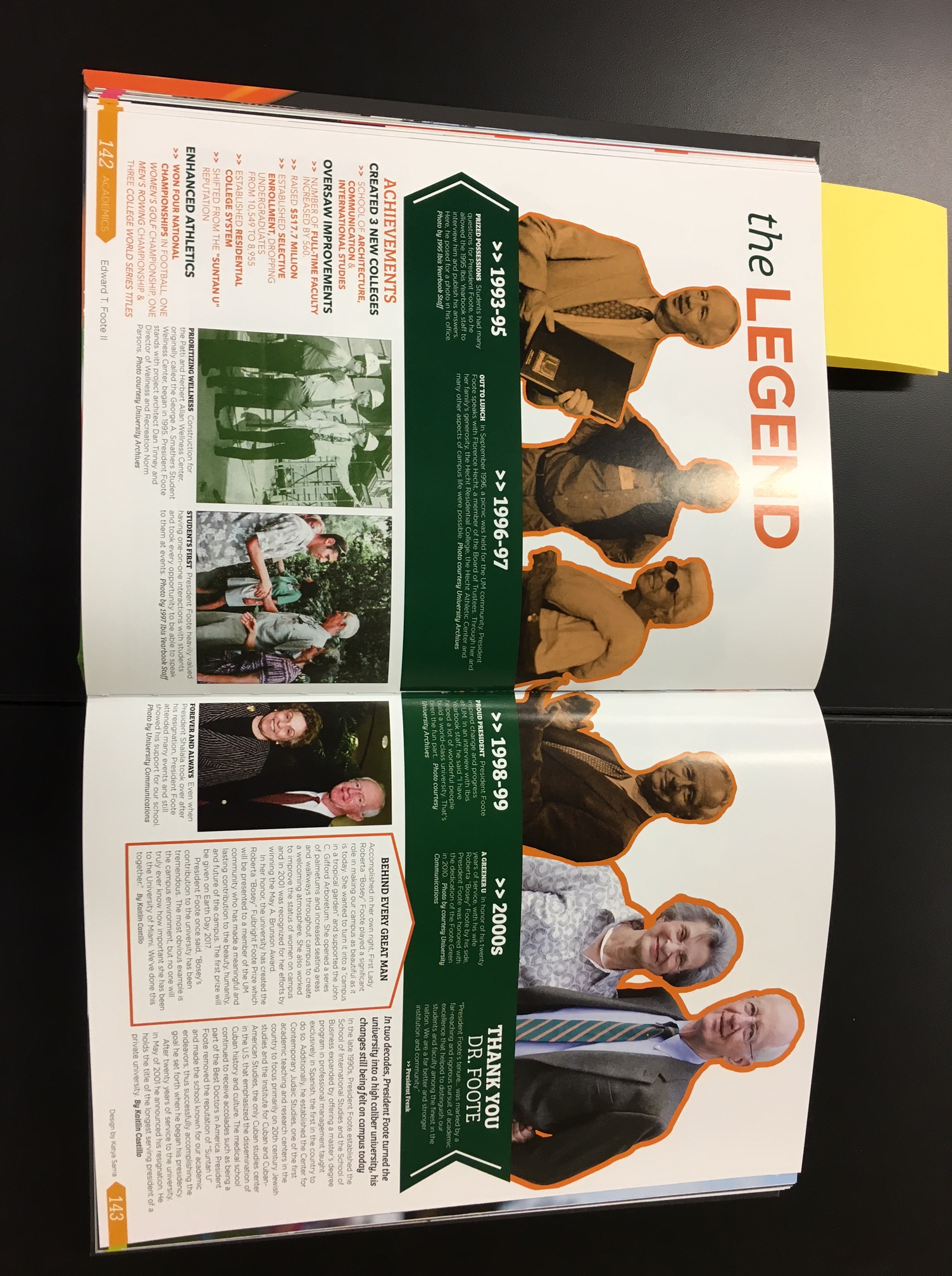
Have you seen the 2016 Ibis Yearbook just came out? University Archives provided research assistance and historical images for the special tribute to President Foote (pp. 138-143) who passed away in February 2016. Also, our contribution to the University event “First at UM,” which took place in January 2016 to celebrated President Frenk’s inauguration, was mentioned on p. 95.

Thank you for the Ibis editors who researched and wrote stories on President Foote's accomplishments as well as President Frenk's inaugural celebrations!
Thank you for the Ibis editors who researched and wrote stories on President Foote’s accomplishments as well as President Frenk’s inaugural celebrations!
In the News, Research Assistance

American Football in Cuba

A reporter from the prestigious NCAA magazine “Champion” contacted us last week. She asked us a permission to use our image for their future story about the 50-year history of playing American football in Cuba. Here is the image they wanted to use.

UM vs. University of Havana game was held on November 25, 1926 on CG campus.

Unfortunately, we do not have the original item in print in our collection, but I am very hopeful to discover it when we start processing the University of Miami Athletics Collection later this academic year. We will incorporate our existing collections of athletic programs, organizational records, and old video tapes into one comprehensive collection which ranges from the 1920s to the early 2000s.

(Click here for the collection record “University of Miami Athletics Collection”)

I got interested in the subject, searched the Internet, and found the two blog stories below. I am very happy to discover Richter’s Cuban Heritage Collection and Univeristy Archives contributed to the two online publications.

American Football in Cuba: A Brief Introduction
http://cubajournal.co/cuba-50-years-of-playing-american-football/

A visual history of Miami Hurricanes football stadiums: from the Orange Bowl to Miami Gardens

UM’s athletic program has a huge following, so I anticipate that the Athletics Collection will attract lots of sports journalists as well as sports fans when processed.

In the News, Research Assistance

Research Assistance for The Palm Beach Post

Athletic field and a stadium were part of the main features of the original proposal of the Coral Gables campus in 1925.

Earlier this month we provided research assistance for a reporter from The Parm Beach Post. He had already researched our digital collections and found good materials on the early history of the Miami Hurricanes and the unfulfilled football stadium on the Coral Gables campus. I was able to provide additional materials from the Historical Photograph Collection, the Campus Architecture Collection, and the Office of the President Records.

Please go to the link below to read the thorough article on the past stadiums used the Miami Hurricanes as well as their new home in the blog story below.

A visual history of Miami Hurricanes football stadiums: from the Orange Bowl to Miami Gardens

Digital Collections, Research Assistance

Historical images for the President’s office

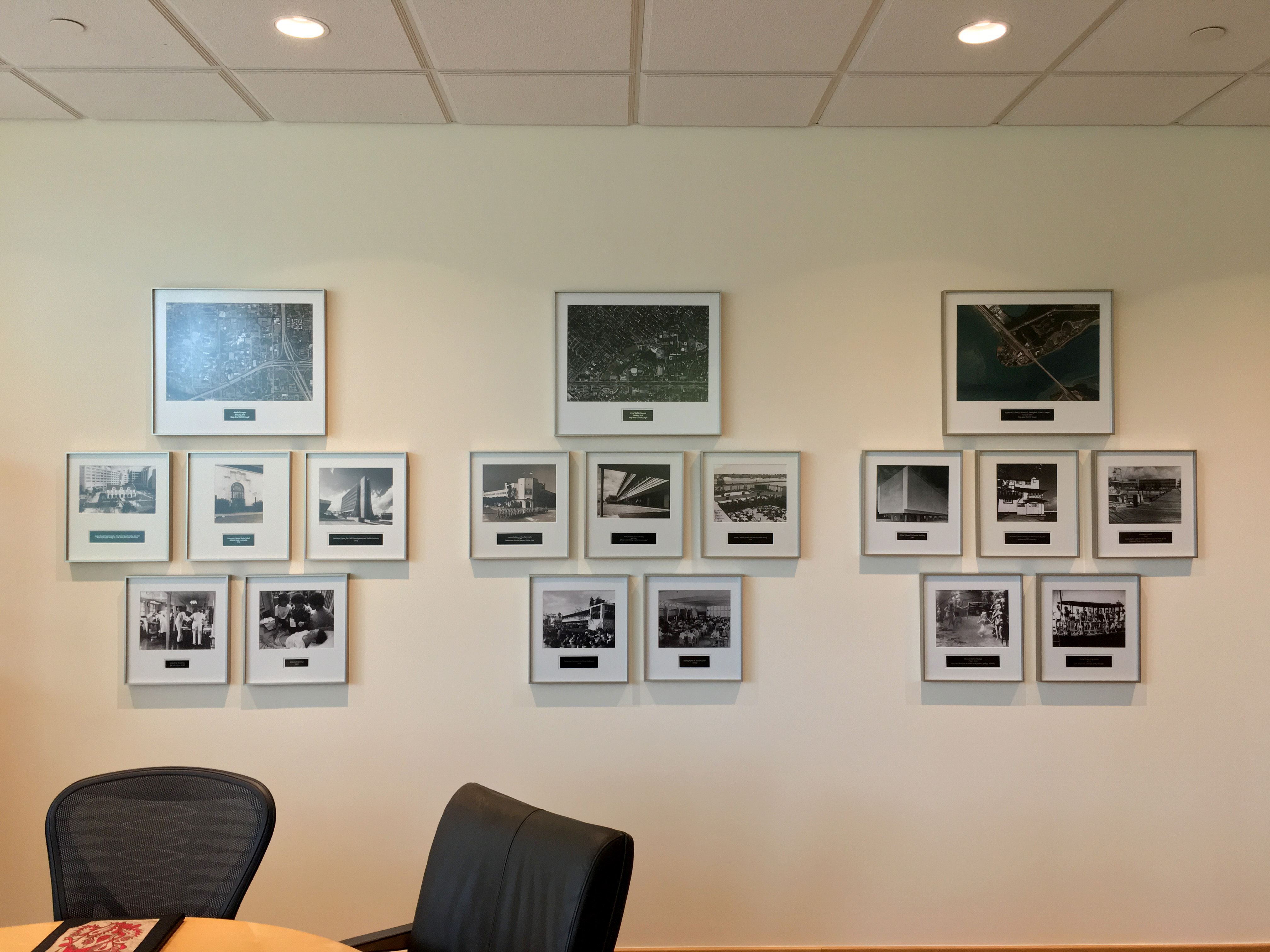
Three clusters of historical images represent Medical, Coral Gables, and RSMAS campuses (left to right)

The University Archives was delighted to provide research assistance and high-resolution images over the last summer for the Campus Planning & Development colleagues, who were asked to select iconic images of the University of Miami to decorate President Frenk’s office. Please see the three clusters of the images selected by the Office that represent the Medical Campus, Coral Gables Campus, and RSMAS Campus (left to right).

We hold more than half a million images of the University from the 1920s to late 1970s. A small portion of the collection (approximately 78,000 images) was digitized and made accessible to the public in 2010 at our website UM Historical Photo Collection for the first time. Today, you can see those historical images everywhere at several prominent places on the Gables campus as well as in many University publications.

Lots of colleagues in the university know we are good at “old” stuff, but soon we will announce a new massive collection of more recent materials from the 1980s to the early 2000s, which was donated by the University Communications in 2013. The collection contains images, videos, publications, and press clippings, which will be a tremendous help for the schools and departments to research their organizational history. Please contact us for further assistance for the new collection.